 영문 사이트 바로가기
 티에스에코텍 유튜브
Business
1
Full-structural reinforcement
∙ The liners used in trenchless replacement and rehabilitation methods utilize HDPE pipes, the same material used for new pipelines. ∙ The use of HDPE pipes enables structural reinforcement equivalent to new pipelines. (compliant with AWWA M28 Class IV) ∙ In particular, HDPE pipes used for trenchless replacement employ multilayer PE-coated pipes, with external protective coatings to safeguard the existing pipe.2
Minimization of Excavation Area
∙ Amendment to Article 339 of the Occupational Safety and Health Standards.
(Prevention of Hazards Caused by Collapse of Excavation Surfaces), Clause 1: “Standards for Excavation Slope Angles” (Revised Nov. 2023) ∙ During excavation-based construction, increased top excavation width leads to issues such as road occupancy permit approvals,
increased earthwork and pavement work, temporary facility installation, and greater inconvenience to citizens. ∙ Trenchless methods require excavation only for access pit construction,
allowing rehabilitation of aging pipelines while significantly reducing excavation areas.
[Current Regulation]
| Type of Ground | Excavation Slope | |
|---|---|---|
| General Soil | Wetland | 1 : 1.0 |
| Dry Ground | 1 : 0.5 | |
| Rock | Weathered Rock | 1 : 0.8 |
| Soft Rock | 1 : 0.5 | |
| Hard Rock | 1 : 0.3 | |
| Road Sections | 1 : 0.3 | |

[Revised Regulation]
| Type of Ground | Excavation Slope |
|---|---|
| Sand | 1 : 1.8 |
| Soft Rock & Weathered Rock | 1 : 1.0 |
| Hard Rock | 1 : 0.5 |
| Other Soils | 1 : 1.2 |
3
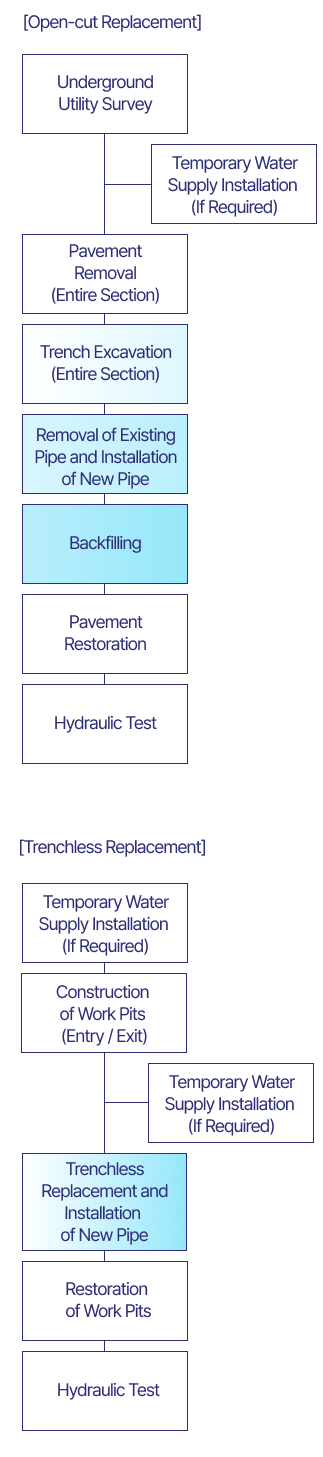
Reduction in Construction Duration
∙ Excavation methods require full-length excavation, resulting in complex processes such as backfilling and pavement restoration, and increased construction time. ∙ Trenchless methods require excavation only at the front and rear access pits, enabling rehabilitation of existing pipelines with minimal excavation.[Open-Cut Replacement]

[Trenchless Replacement]

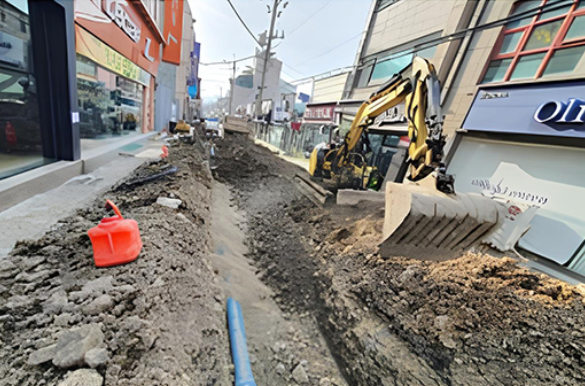
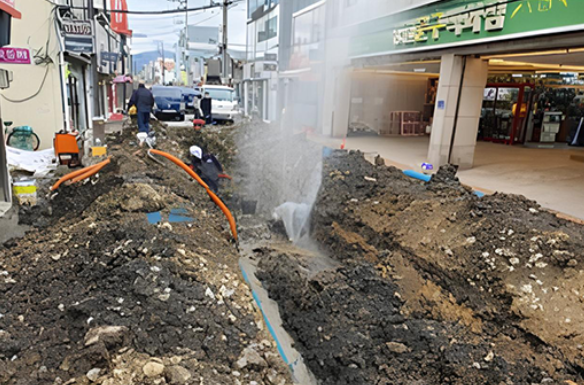
[Excavation]
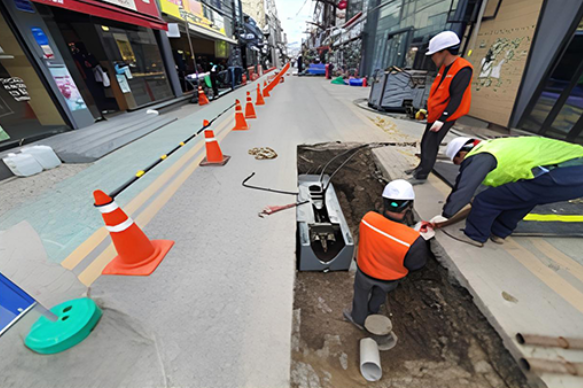
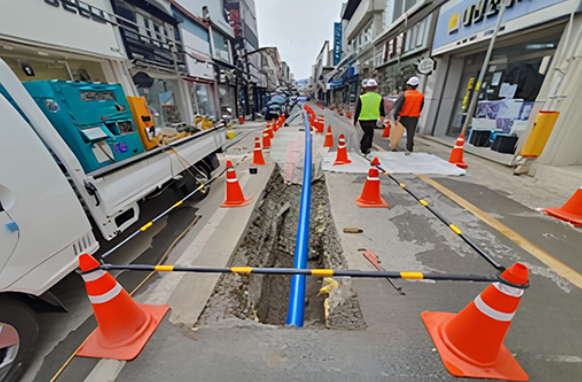
[Trenchless Replacement]
4
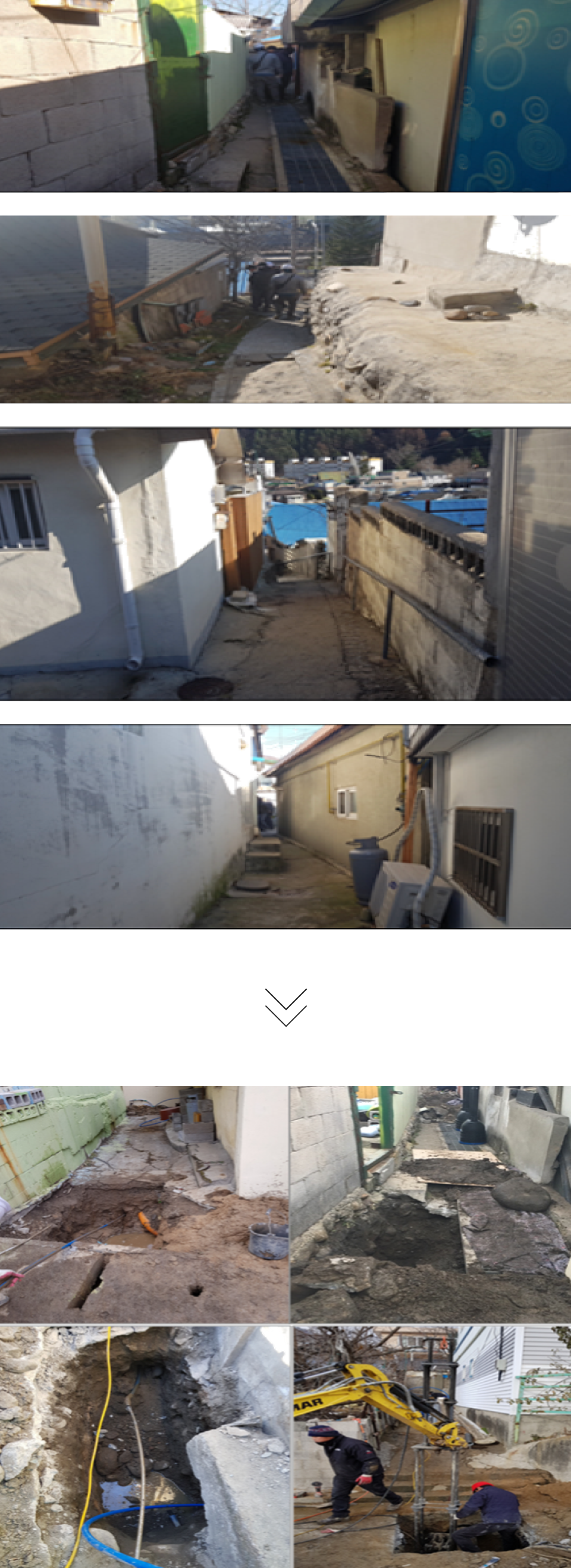
Trenchless Construction in Confined Areas
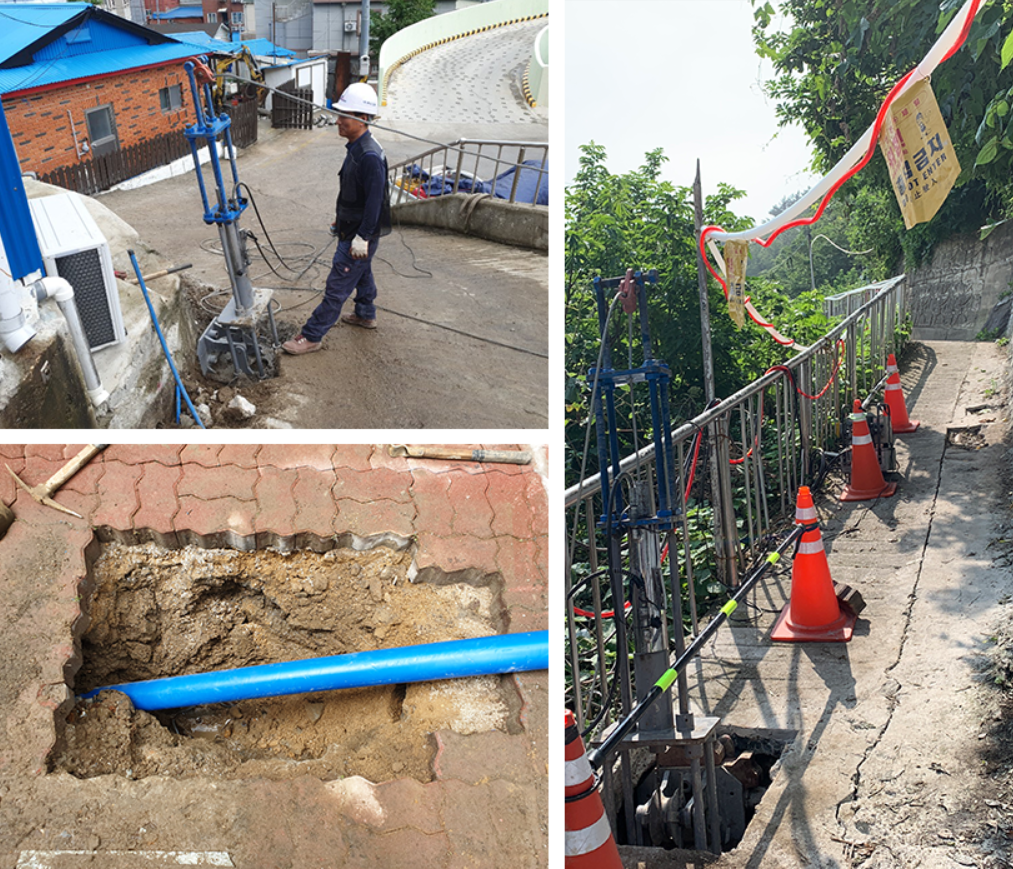
∙ Small-diameter pipelines are often installed in narrow alleys where excavation equipment cannot access, or are buried alongside other underground utilities. ∙ Using trenchless equipment, aging water pipelines can be rehabilitated in a short time without excavation in inaccessible areas.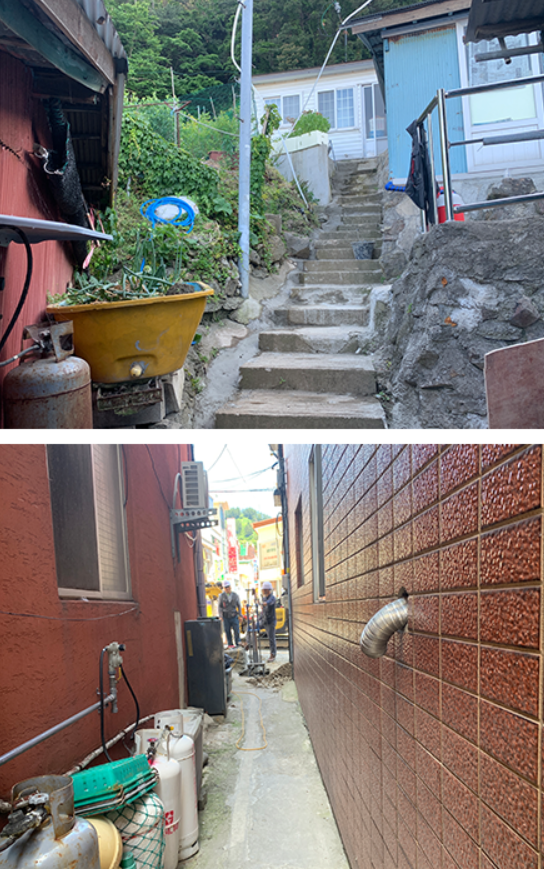
5
Reduction in Carbon Emissions
∙ Comparison of CO₂ emissions when replacing a pipeline (Diameter D300mm, Length L = 1,000m) using excavation and trenchless methods.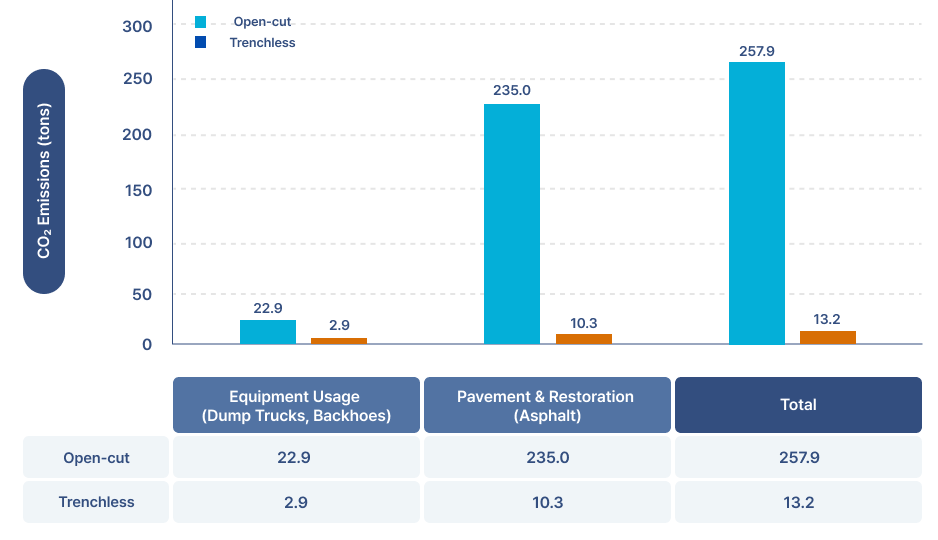
Reduction of
244.72tCO₂(95.0%)
6
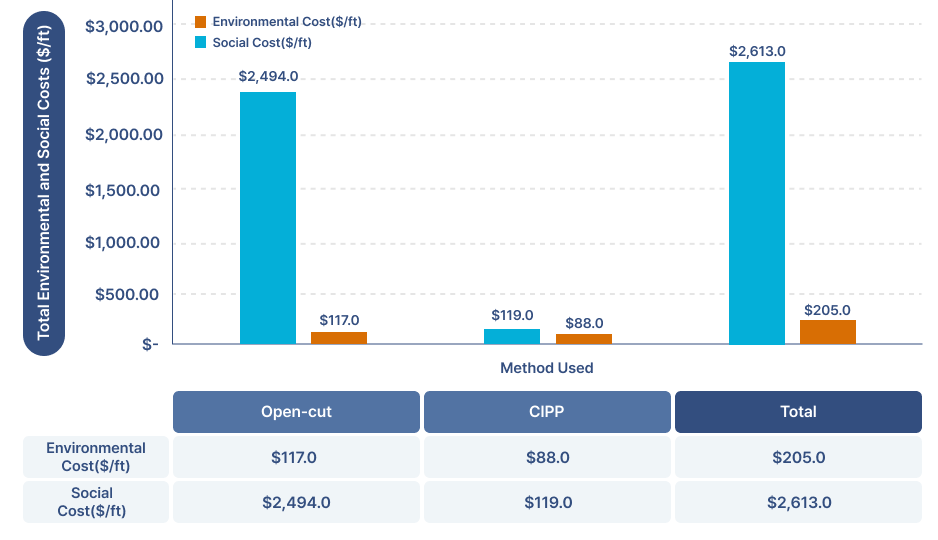
Reduction of Social Costs
∙ Comparison of environmental and social costs is an essential factor when considering the sustainable development of underground infrastructure. ∙ Comparison of Environmental and Social Costs between Open-Cut and Trenchless (CIPP) Methods"Vinayak Kaushal 2019(The University of Texas at Arlington)"